
Energy-Based Devices: Optimizing Outcomes in Skin of Color
CONTRIBUTOR: Dr. Sheila Barbarino, MD, FAAO, FAACS, FACS
Overview
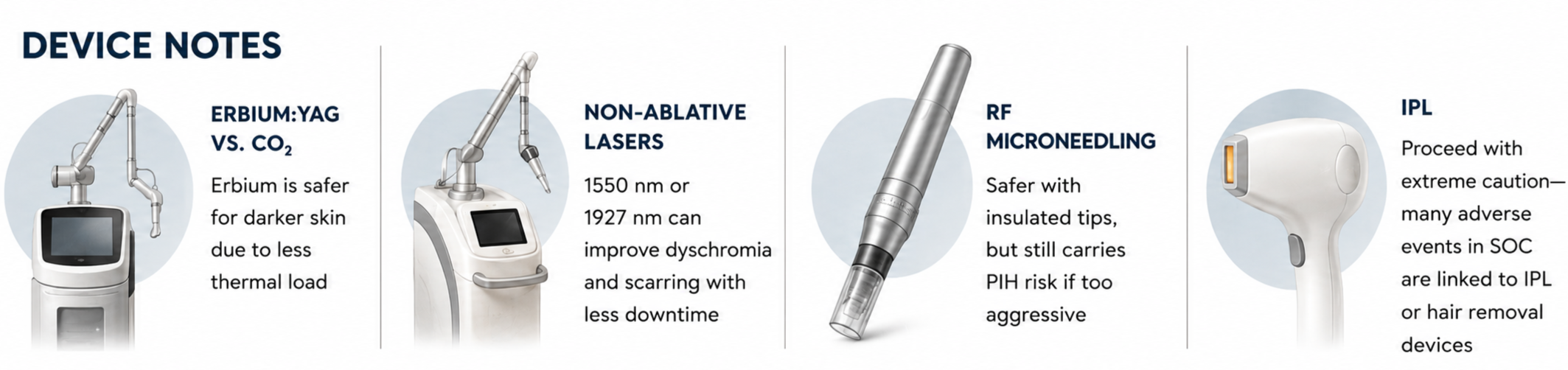
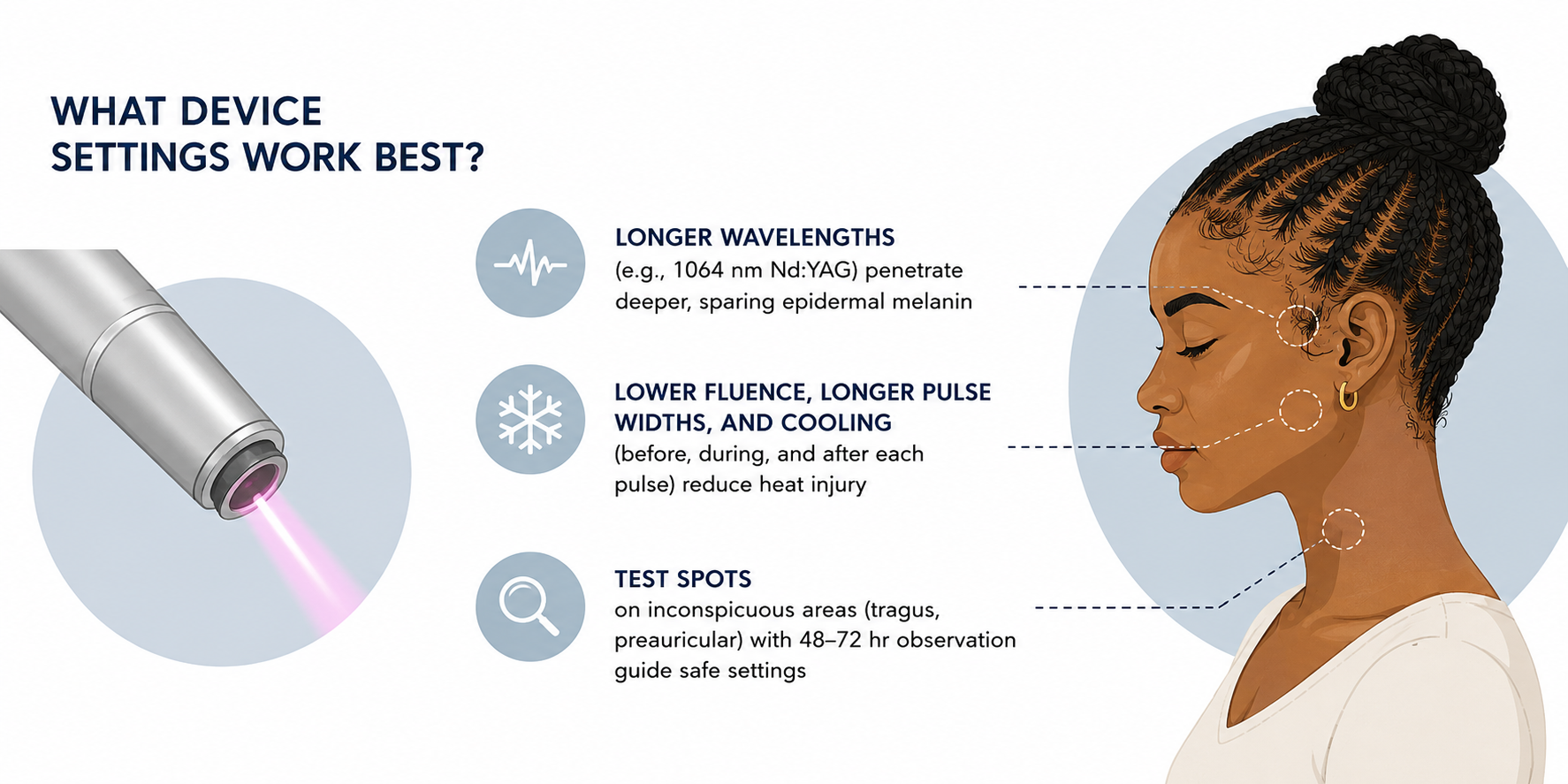
Many clinicians have avoided lasers and energy-based devices in patients with darker skin tones because of the risk of PIH, hypopigmentation, burns, and scarring. These concerns are real, melanin competes as a chromophore and holds heat longer, raising the risk of injury. But as Dr. Barbarino emphasizes, with the right prep, parameters, and post-care, lasers can be both safe and effective.
A message From OUR COUNCIL:

Dr. Sheila Barbarino
“In novice hands, especially with darker skin types, outcomes can be irreversible. “
DIY devices promoted online are risky. Patients should avoid them and work with medical professionals who can ensure safe, tailored care.
If You See Trouble…
-
24-48 hours post-procedure:
Persistent Dark Redness
Consider oral + topical steroids promptly.Severe Pain
Add anti-inflammatory therapy + steroids as indicated.Blistering or Worsening Redness
Follow daily and escalate treatment quickly if symptoms progress.
-
Post-Inflammatory Hyperpigmentation (PIH)
Treat with hydroquinone, vitamin C, or other brightening agents.Hypopigmentation
Consider bimatoprost to support repigmentation.
-
Monitor Daily
Have patients submit daily photos to track healing and identify changes early.Cool + Hydrate
Encourage hydration, cooling masks, cold compresses, and LED therapy when available.Avoid Heat for 24–48 Hours
Limit exercise, saunas, hot showers, and other heat triggers during early recovery.
Dr. Barbarino’s Top Pearls
PREP MATTERS.
Start melanocyte-stabilizing topicals 4–6 weeks before treatment; stop photo-sensitizers; enforce strict SPFPOST-CARE IS CRITICAL.
Ice/cooling masks immediately and for 24-48 hrs if redness or pain persists. Watch for dark red skin and start oral/topical steroids earlyCULTURE COUNTS.
In many Asian, Hispanic, and Middle Eastern cultures, pigment is undesirable, so expectations need extra careIF HYPOPIGMENTATION OCCURS
Bimatoprost can sometimes help restore pigment.STAY CLOSE.
Daily photo check-ins in the first 48 hrs catch adverse events early
Frame the conversation with patients
Be transparent: Name risks of PIH, hypo, and scarring up front
Show real cases: Before/after photos of similar tones set realistic expectations
Use test spots: Demonstrates safety and builds patient confidence
Set expectations: Improvement takes multiple sessions; safety comes before speed
RESOURCES AND REFERENCES
Laser Use in Skin of Color:
Guidelines and Reviews
Kaushik S, Alexis A, Nonablative Fractional Laser Resurfacing in Skin of Color: Evidence-based Review
J Clin Aesthet Dermatol. 2017;10(6):51–67
Alexis A, How to Properly Use Lasers in Skin of Color Patients
Dermatology Times, January 2023 (Vol. 44. No. 01)
Hyperpigmentation:
Moolla S et al., Dermatology: how to manage facial hyperpigmentation in skin of colour.
Drugs Context. 2022;11:2021-11-2.
Roberts WE, et al., Laser Treatment of Skin of Color for Medical and Aesthetic Uses With a New 650-Microsecond Nd:YAG 1064nm Laser. J Drugs Dermatol. 2019 Apr 1;18(4):s135-137. PMID: 31017752.
Acanthosis nigricans:
Bitterman D, et al. Systematic review of topical, laser, and oral treatments in acanthosis nigricans clinical trials. Arch Dermatol Res. 2024 Jun 21;316(7):424. doi: 10.1007/s00403-024-02931-3. PMID: 38904687.
Rosacea:
Chen, A., et al Review of laser and energy-based devices to treat rosacea in skin of color.
Journal of Cosmetic and Laser Therapy, 2024, 26(1–4), 43–53.
Acne:
Huerth Ket al., Established and Emerging Laser Treatments for Acne Vulgaris in Diverse Skin Types. J Clin Aesthet Dermatol. 2025 Jun;18(6):41-48. PMID: 40575606; PMCID: PMC12189219.