
Solar Focus: Beyond UV in Skin of Color
CONTRIBUTORS: Jared Jagdeo, MD • Jane Yoo, MD
Overview
Dr. Jared Jagdeo and Dr. Jane Yoo share practical guidance on visible light, photo-protection, sunscreen selection, skin cancer recognition, and patient education for skin of color.
Why Think Beyond UV?
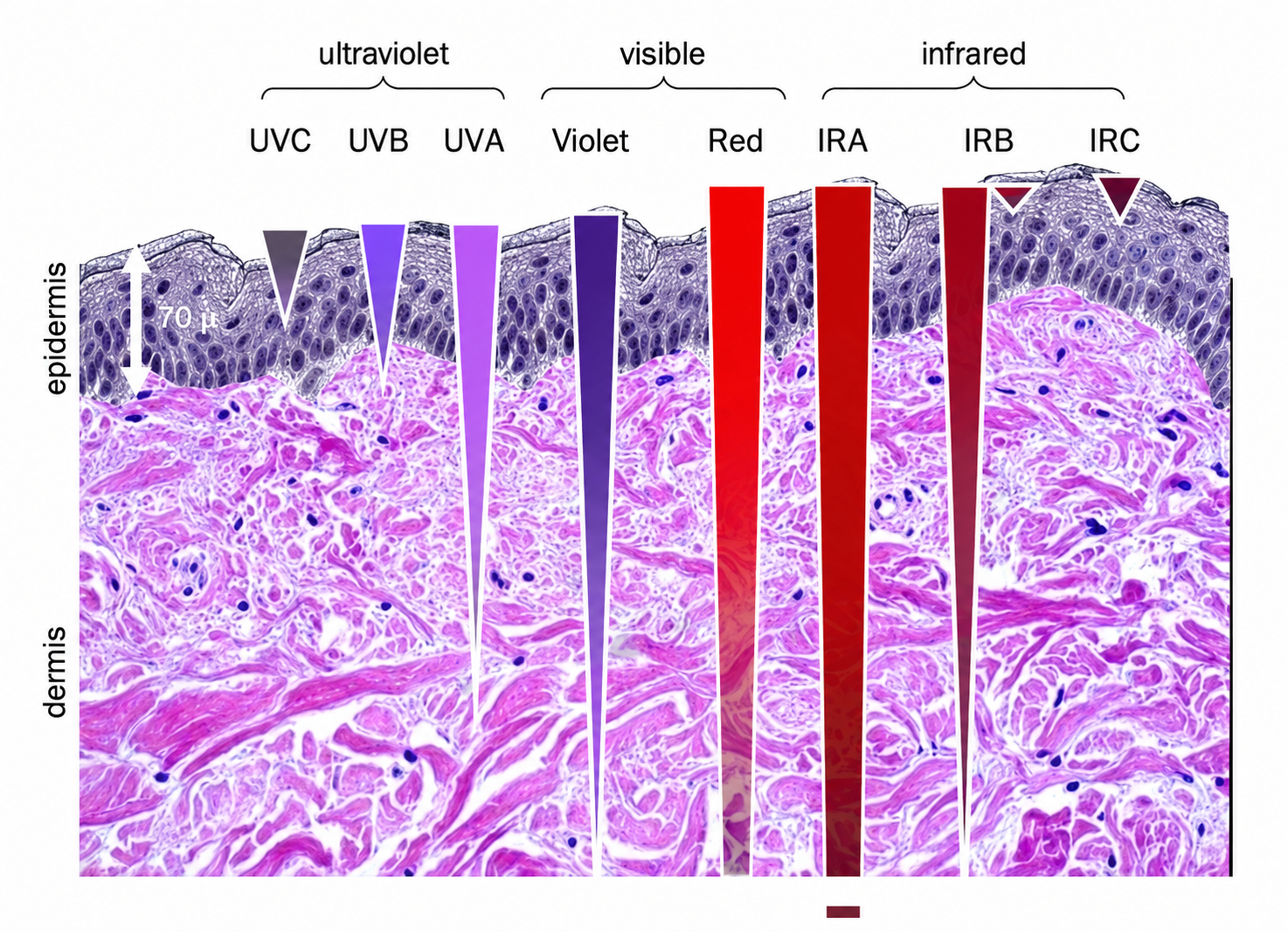
Most patients (and many doctors) focus only on UV when they think of sun protection. But for people with skin of color, visible light and infrared (IR) radiation are just as important.
Dr. Jared Jagdeo explains that visible and IR light make up 95% of solar radiation. Studies show darker skin tones are especially sensitive to visible light, particularly red and blue wavelengths. This explains why dyspigmentation in SOC often persists despite “good” UV-only sunscreen habits.
What Does This Mean for Sunscreen Choice?
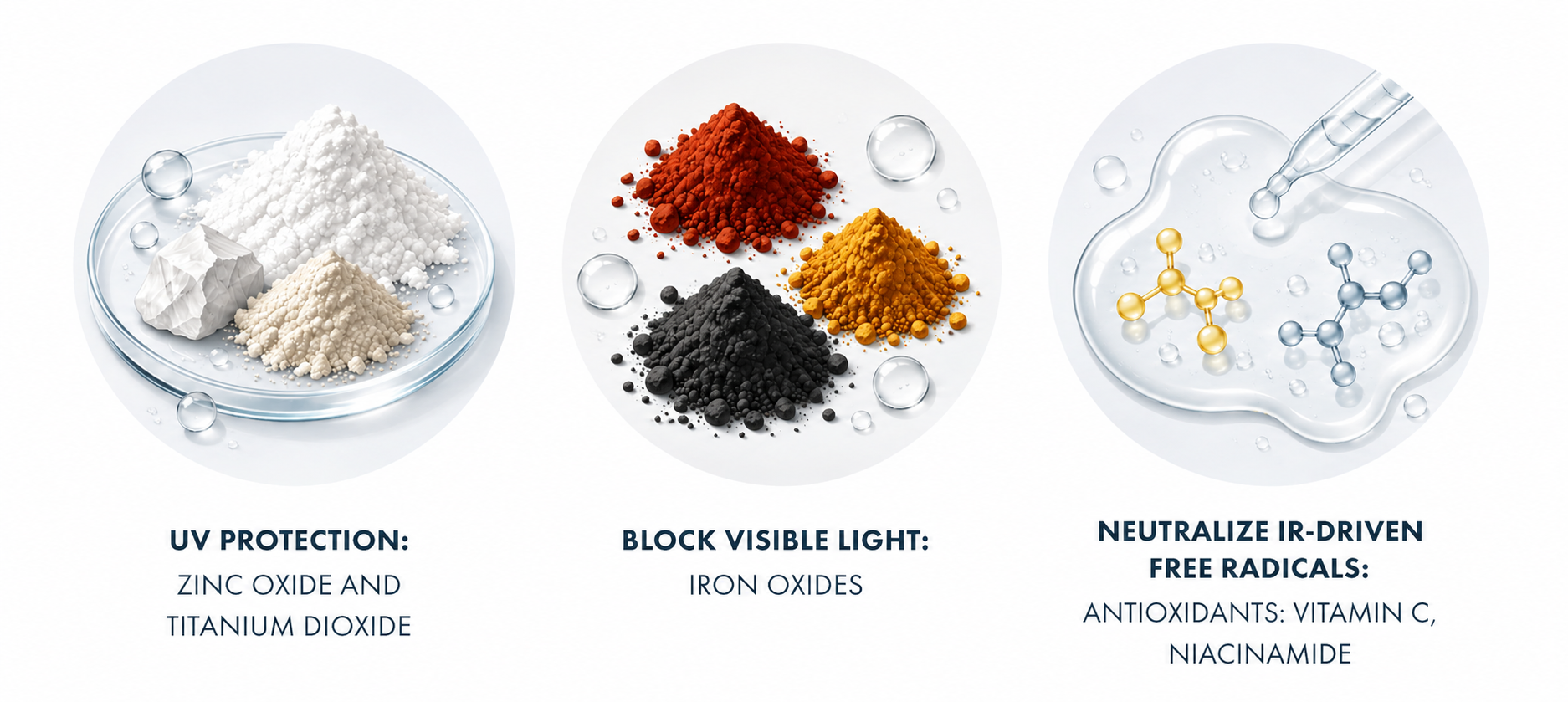
Mineral sunscreens with iron oxides are essential for patients of color. Unlike standard UV filters, iron oxides protect against visible light - the main driver of pigmentation and melasma flares. Tinted formulations also help camouflage dyschromia while blending naturally with darker skin tones.
“New tinted mineral sunscreens protect against visible light and blend beautifully with diverse skin tones - no chalky cast.” —Dr. Jane Yoo
-
Most often appears as acral lentiginous melanoma (ALM) on palms, soles, or nail beds
Commonly misdiagnosed → lower survival in Black and Asian patients
-
Appears pigmented, often mistaken for benign lesions
Rising incidence among Hispanic and Asian populations
-
Most common in Black patients
Frequently develops in scars, burns, or chronic inflammation sites
Are skin cancers
a concern for
skin of color?

Dr. Jagdeo
on Visible Light
“We found that darker skin toned persons developed hyperpigmentation with visible red light, while lighter skin did not. Melanin-rich skin is far more reactive to the full solar spectrum.”

Dr. Yoo on
Photoproection & Cancer
“Even the darkest skin tone only has a natural SPF of about 13. That’s not protection. Sunscreen is for everyone, every day.”
Practical Pearls for Patients
Choose tinted mineral sunscreens with iron oxides for visible light protection
Recommend daily use indoors and outdoors - screens and artificial light also trigger pigmentation
Teach patients that sunscreen is not just for burns - it prevents hyperpigmentation and cancer
Match tints to skin tone for better adherence
RESOURCES AND REFERENCES
Impact of Visible and IR Light
Visible light. Part II: Photoprotection against visible and ultraviolet light
Geisler, Amaris N. et al.
Journal of the American Academy of Dermatology, Volume 84, Issue 5, 1233 - 1244
Effects of visible light on mechanisms of skin photoaging
Pourang et al,
Photodermatol Photoimmunol Photomed. 2022 May;38(3):191-196.
Misperceptions of photoprotection in skin of color
Taylor et al.
JAAD, Volume 86, Issue 3, Supplement S9-S17March 2022
Broad Spectrum Iron oxide Sunscreens
Impact of Iron-Oxide Containing Formulations Against Visible Light-Induced Skin Pigmentation in Skin of Color Individuals
Dumbuya et al, J Drugs Dermatol. 2020;19(7):
Skin Cancers
Skin Cancer Crisis In People of Color
Skin of Color Revolution Crucial Lessons Learned